Snowblind Aircraft
|
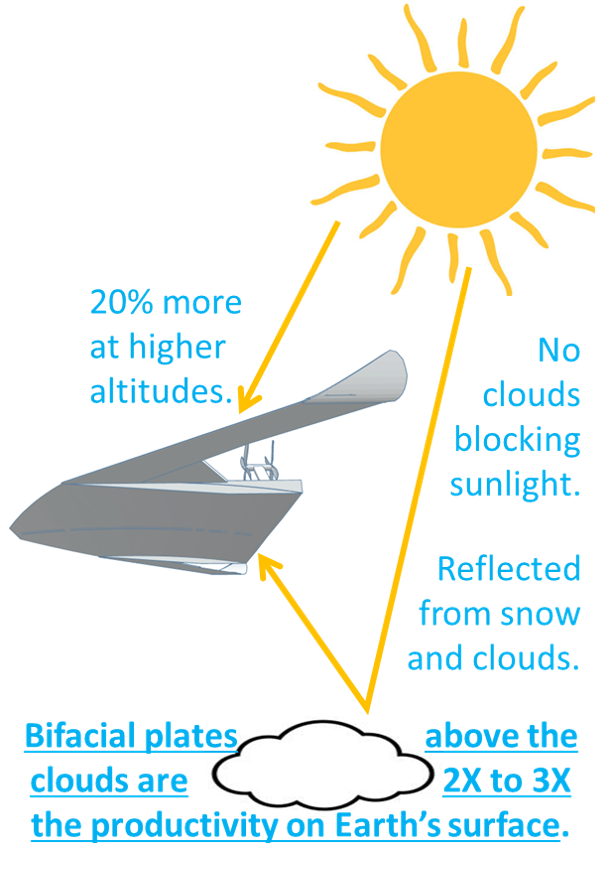
The light can be unbearably bright around an airliner flying above the clouds. The sun has 20% greater intensity at higher altitudes and up to 90% of sunlight is reflected by clouds and pristine snow. Obviously, being above the clouds alleviates decreases in sunshine from cloud cover.
Solar panels can be directly used as airfoils with good lift-generation and low drag. Use of bifacial plates in this application can result in one module installation providing more than twice the solar productivity of that module on Earth's surface. At cloudy locations like Seattle, solar productivity can be more than 3X the productivity on Earth's surface. Ironically, the most cloud-stricken locations that are not good for today's ground-based solar will be the best locations for snowblind aircraft which can transfer their energy to the ground. Bifacial plates are increasing in utilization. With solar module costs reducing to less than 1 ¢/kWh and easy installation of solar panels as wings, the near future will avail aerial solar costs of less than 0.5 ¢/kWh; that is less than 3% of the cost of aviation fuel. Unlike ground-based solar that has to compete with relatively low cost grid alternative and requires batteries to fully use the solar energy; aerial solar replaces the shaft-work cost of aviation fuel and reduces battery and/or fuel costs and weights on the aircraft. Also, the costs will keep decreasing as solar technology continues to improve. Of course, these reductions may be exaggerated; the costs may be as high a 5% of current costs for aviation fuel when aircraft are in high use during daylight hours. Highly-advantageous use of solar panels in high speed and larger aircraft was only recently considered a pipedream. Today, snowblind solar is poised to disrupt all of subsonic aviation! |
|
Solar Energy's New Frontiers
Solar energy is the fastest growing source of new electricity in America.
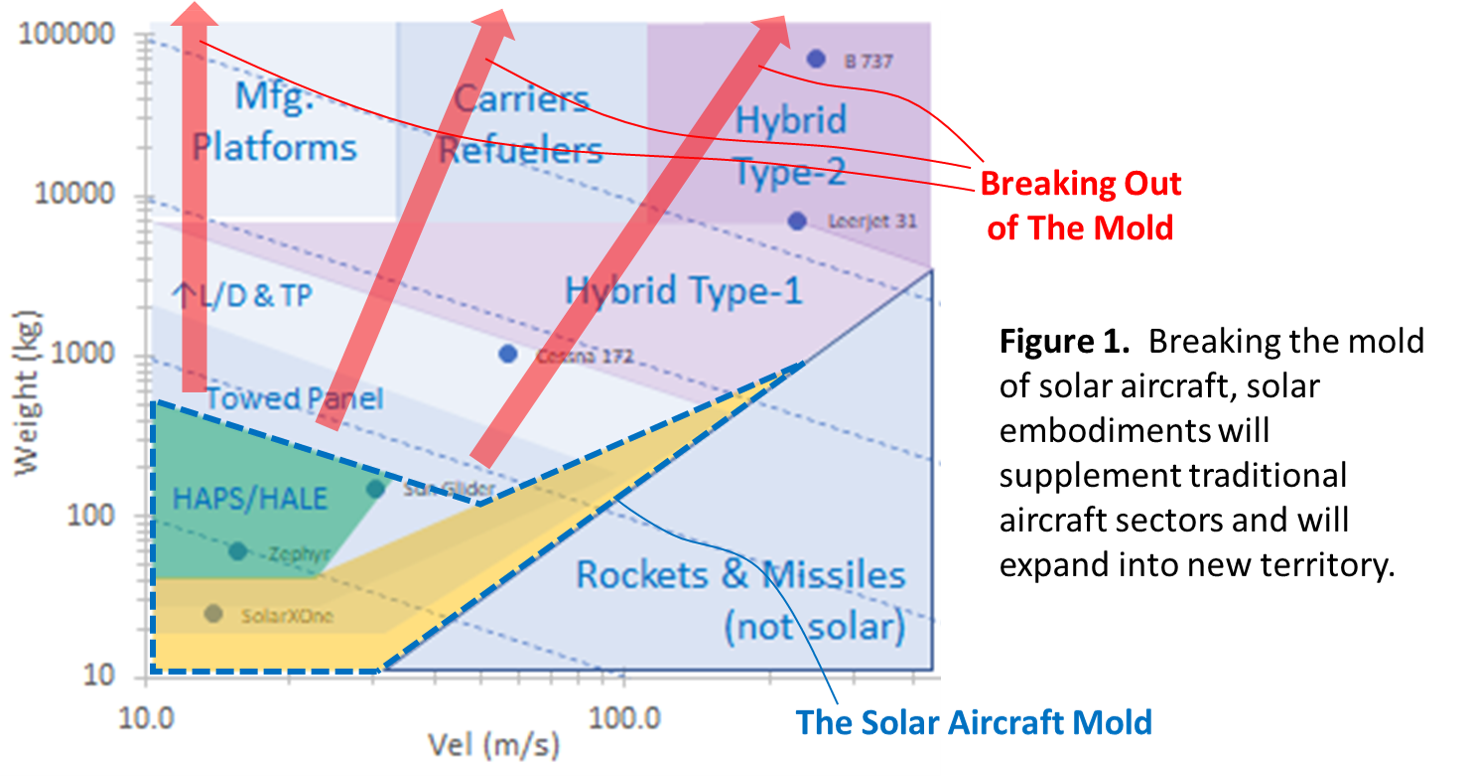
Applications will expand to all subsonic aerial vehicles with high and increasing profitability.
Applications will expand to all subsonic aerial vehicles with high and increasing profitability.